

Outdoor lighting does two jobs at once. It makes a home safer to move around at night, and it decides how the house looks once the sun goes down. Most homeowners focus on the first job and forget the second, then end up with a harsh floodlight over the garage and a dark patio. If you are still choosing fixtures, this overview of the best outdoor light brands is a handy starting point.
A better approach is to plan the lighting by zone. Start at the front door, then move to the path, the driveway, the patio and the garden. Each zone needs a different kind of light, and mixing them well is what makes a house feel finished.
Start with the entry and the path
The front door is the first thing a guest sees, so give it a warm, steady light at roughly eye level or just above. Wall lanterns on either side of the door work well, and a single fixture is fine for a narrow porch. For the path, low fixtures that cast a small pool of light on the ground are enough. You want people to see their footing, not to light up the whole garden.
Keep the color warm
Color temperature is the quickest way to improve a lighting plan. Bulbs in the 2700K to 3000K range give a soft, golden light that flatters brick, wood and plants. Cooler bulbs at 4000K or above look clinical outdoors and can be glaring. DarkSky International’s five principles for responsible outdoor lighting recommend light that is useful, targeted, low level, controlled and warm-colored, and that checklist is a good filter when you compare fixtures.
Shield and aim the light
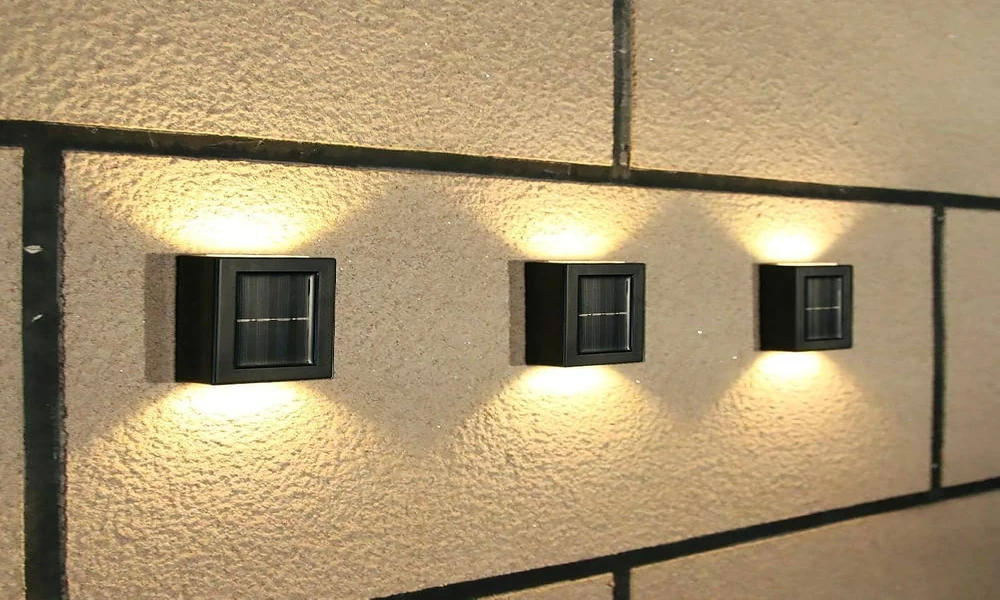
A fixture that shows its bare bulb throws glare into your own eyes and your neighbors’ windows. Choose fixtures with a hood or shade so the light falls down and onto the surface you want to see. Aim up-lights at a tree trunk or a textured wall rather than at the sky, and keep them dim.
Use timers and motion sensors
Lights that run all night waste energy and add little security. A dusk-to-dawn sensor or a timer handles the always-on needs like the porch. Motion sensors suit the side yard and the back door, where you only need light when someone is there. Controlled lighting also lowers the bill and extends the life of the bulbs.
Compare brands before you buy
Outdoor fixtures take weather, salt, sun and temperature swings, so build quality matters as much as style. Look at the finish rating, the seals around the lens and the warranty. If you want a starting point, a roundup of the best outdoor light brands can help you compare styles and materials side by side before you commit to a set.
A simple plan for a weekend
1. Walk the property at dusk and note where you need light.
2. Pick one fixture style and finish and repeat it across zones.
3. Choose warm bulbs at 3000K or lower.
4. Add a timer or sensor to each circuit.
5. Test the aim after dark and adjust.
Think about the whole evening
It helps to picture how the space is used from sunset to bedtime. Early in the evening you may be grilling, eating outside or greeting guests, so the patio and entry need the most light. Later, you mostly need a gentle glow and a few safety lights. Putting different zones on different switches, or on dimmers, lets you move between those modes without leaving everything at full strength.
Layer the light
Professional designers rarely rely on one source. They combine ambient light for general visibility, task light for cooking or reading, and accent light for trees, stone and architectural details. You do not need all three everywhere. A patio might use a wall sconce for ambient light and a small spotlight on a planter for accent, while the path only needs low ambient light.
Mind the neighbors
Spill light is the most common complaint about outdoor lighting. A fixture that looks fine to you can shine straight into a bedroom next door. Walk to the property line at night and look back at the house. If you can see bare bulbs from there, add a shade, lower the fixture or change the angle. Thoughtful lighting is considerate as well as attractive.
Good outdoor lighting is mostly about restraint. A few well-placed, warm, shielded fixtures will do more for a home than a wall of bright lights.