

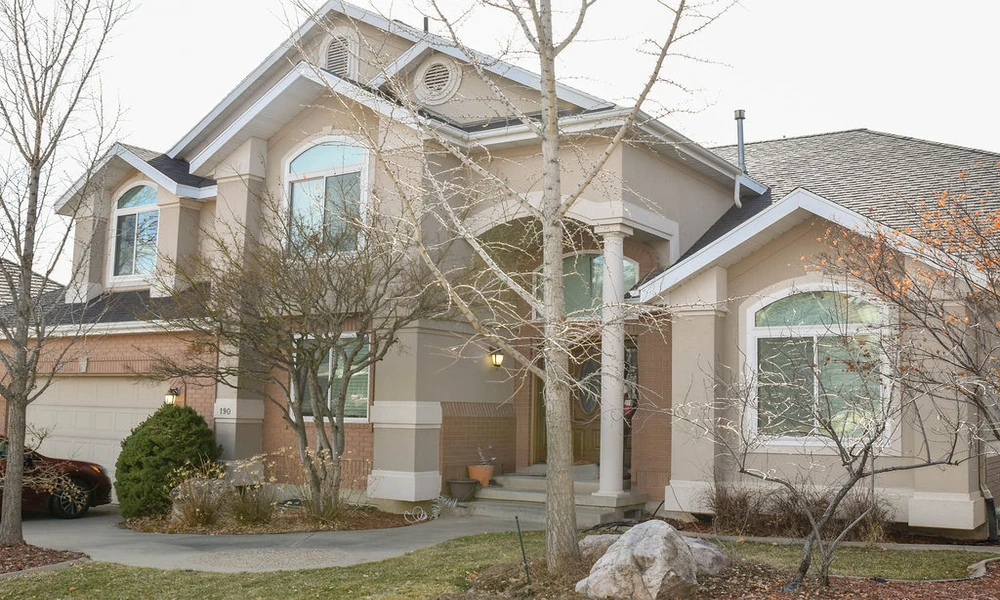
Window replacement is a sizable project, and homeowners in Twin Falls may wonder how much of the cost they can recover when they sell. The answer comes down to the value recovered at resale and the energy saved during the years of ownership. Each reflects a different part of the project’s overall financial return. Before booking a job with a company such as Nu-Vu Glass, consider each one separately.
What Resale Data Tells Homeowners
The annual Cost vs. Value Report estimates how much of a project’s cost is recovered at resale by region. The 2025 report’s Mountain division puts vinyl window replacement at 79.6% of cost recouped, on an average job of $21,165 against $16,845 in added resale value. Wood window replacement recovers 72.2%, on a higher job cost of $26,322. Both figures were higher than in 2024, when vinyl recouped 75.5% and wood 70.1%.
The 79.6% figure needs some explanation before a Twin Falls homeowner applies it to a specific property. The figure is a Mountain-division average that covers multiple cities, and the report shows that results vary at the city level. It is a useful benchmark, though it does not predict what a particular Twin Falls home will recover. The more important point is that neither window replacement category reaches 100% cost recovery in these Mountain-division averages, so resale value alone does not cover the work.
Why the Vinyl and Wood Figures Differ
The two percentages reflect different project costs and estimated resale values. Vinyl has the lower average project cost in the report, so its $16,845 resale value represents a larger share of the original investment. Wood costs more on average, so its $18,994 resale value represents a lower percentage of the project cost. The Department of Energy advises comparing windows by performance ratings such as U-factor and solar heat gain coefficient, rather than judging efficiency by frame material alone. That means the choice between vinyl and wood should not be treated as an efficiency decision based on frame material by itself.
Energy Savings During Ownership
The other potential benefit comes while the home is occupied. The Department of Energy estimates that windows account for 25% to 30% of a home’s heating and cooling energy. ENERGY STAR publishes modeled savings for specific scenarios. Replacing ten older, inefficient windows with certified units is associated with about $568 a year in a Northern-zone home, while replacing clear double-pane windows with ENERGY STAR certified units is associated with about $282 in annual savings. These are modeled examples, and ENERGY STAR advises homeowners to identify their own local climate zone, so a Twin Falls home should be treated on its own terms. Actual savings depend on the existing windows, the number and size of openings, the heating system, energy prices, and the efficiency of the replacements.
Twin Falls Housing Market Data
These figures do not establish a specific resale premium for replacement windows. Over the three months ending August 2026, Redfin reported a median Twin Falls sale price near $370,000, up about 0.5% from a year earlier, with homes spending a median of 34 days on the market. These numbers show the broader conditions sellers are facing in Twin Falls. A home’s condition, including its windows, needs to be evaluated on the property itself. Any effect on resale value is specific to the home and the buyer, so it is better treated as a factor than a fixed figure.
How to Measure the Overall Payoff
Resale recovery and energy savings account for different parts of the overall payoff, so it helps to consider them together. Using the Mountain vinyl benchmark, a $21,165 project that adds $16,845 in resale value leaves about $4,320 unrecovered at sale. It is tempting to divide that by an energy figure like $568 and call the result a payback period, but the two numbers describe different things. The Cost vs. Value project and the ENERGY STAR scenario assume different homes, window counts, and starting conditions, so they do not combine into a guaranteed payback.
A calculation for one home needs several specific inputs, including the project quote, the type and condition of the existing windows, estimated energy savings for that property, and the owner’s expected length of stay. The ownership period is especially important. A homeowner selling next year has less time to benefit from energy savings, so the resale recovery matters more to the decision. Someone staying for a decade has more time for lower energy use to contribute to the project’s overall value.
