

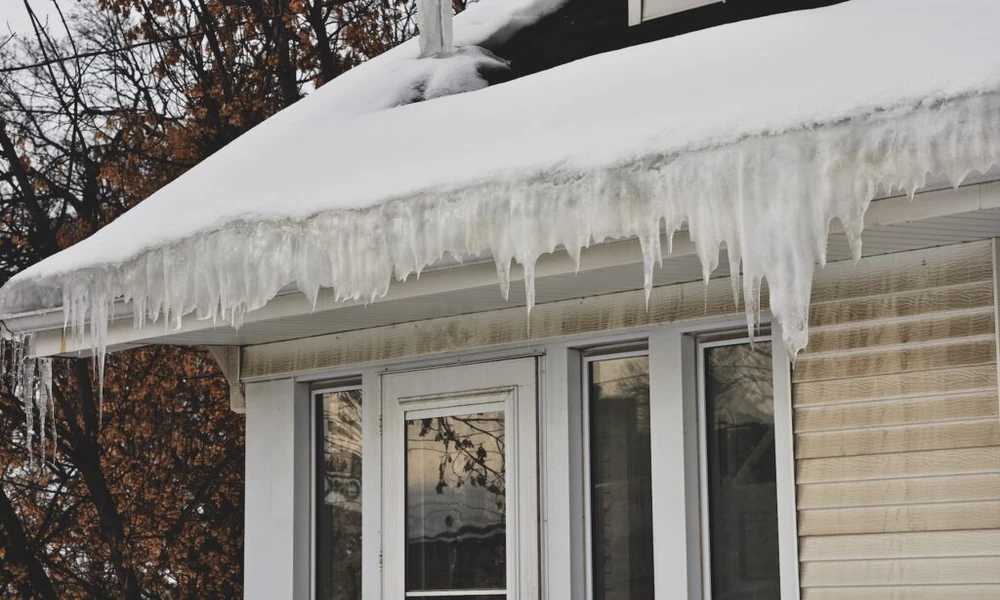
Drive through Petoskey, Harbor Springs or Gaylord after a long lake-effect stretch in February and you will notice two kinds of houses. Some wear an even blanket of snow from ridge to gutter. Others carry a thick ridge of ice welded to the roof edge, with icicles hanging nearly to the snowbank. Those icicles look lovely, but they often mean a ceiling stain is on its way.
Northern Michigan winters lean hard on every surface of a home, which is why plenty of homeowners around Little Traverse Bay call on Quality Roofing and Exteriors when snow starts causing trouble. The Petoskey crew installs standing seam metal and architectural shingle roofs, and it also handles vinyl, LP and board and batten siding along with soffit and fascia. That mix is worth noting, because an ice dam rarely stays a roof problem for long. It begins at the shingles, soaks into the fascia, and can finish its trip running down the inside of a wall.
A Roof Running at Two Temperatures
An ice dam is really a temperature mismatch. Snow on the upper roof melts because the deck underneath it is warm. The meltwater trickles toward the edge, where the roof hangs past the exterior wall over open winter air. That overhang is cold, so the water freezes again, and every thaw adds another layer to the ridge.
Once the ridge is a few inches high, fresh meltwater pools behind it. Shingles are built to shed water moving downhill, not to hold back a puddle, so the water creeps upward under the tabs and finds every nail hole on its way into the attic.
For a dam to form, three conditions have to line up at once.
- Enough snow on the roof to trap heat against the deck, and the fluffy snow off Lake Michigan is an excellent insulator.
- An upper deck sitting above freezing, which almost always comes from heat leaking out of the living space.
- An eave and gutter staying below freezing, which they will on any normal January night up north.
Remove any one and the dam cannot be built.
Hunting Down the Warm Spots
Thin insulation gets most of the blame, but air leaks usually do more harm than missing fiberglass. Warm, moist household air rises through recessed ceiling lights, unsealed attic hatches, bathroom fans that vent into the attic instead of outdoors, plumbing stacks, chimney chases and the open tops of interior walls.
Older story-and-a-half homes, so common in the region’s lake towns, are the classic ice dam house. Their sloped bedroom ceilings and short knee walls leave only a few inches for insulation, so the roof above the living space runs warm all winter.
A few clues show where heat is escaping before any drip appears.
- Snow melting off in neat stripes usually means heat is passing straight through the rafters.
- A bare circle of shingles above a bathroom or kitchen points to a fan or vent dumping warm, wet air.
- Frost or dark staining on the underside of the roof deck, seen with a flashlight in January, signals moisture that has been condensing for a while.
Iowa State University Extension’s AnswerLine has a short, practical explainer on why ice dams form and how sealing and insulating the attic stops them that is worth reading before any inspection.
The Overhang Takes the Beating
Soffit vents are the intake half of a roof’s breathing system. Cold outdoor air enters under the eaves, sweeps beneath the roof deck and exits at the ridge vent. When that works, the whole deck stays near outdoor temperature and snow sits on it evenly.
Trouble starts when the intake gets choked. Older homes often have solid soffits, vents painted shut, or insulation packed against the eaves with no baffle to keep air moving.
The fascia board takes the next hit. Backed-up water soaks into it, and wood fascia that stays wet through several thaws softens and rots. Gutters do not cause ice dams, but a gutter packed with ice gives the dam a solid footing, and that weight can bend hangers or pull a run loose from a weakened board.
When the Water Reaches the Walls
Water that gets past the roof edge does not always drip politely onto a ceiling. Often it runs down inside the exterior wall, soaking insulation, swelling window trim and blistering paint. Wet insulation loses much of its value, which lets more heat escape and feeds the next dam.
Siding can hide this for a surprisingly long time. Vinyl sheds water nicely on the surface while the sheathing behind it stays wet. Engineered wood and board and batten hold up well in snow country, but only with sealed cut ends and proper flashing where a lower roof meets a wall. A missing kickout flashing at that joint is one of the most common entry points for meltwater.
What the Roof Itself Can Do
The first defense in the roofing layer is a self-adhering ice and water membrane along the eaves. The International Residential Code, which Michigan’s residential code is built on, calls for an ice barrier reaching from the roof edge to at least 24 inches inside the exterior wall line wherever ice damming is a known risk. It seals around nails, but it is a backup rather than a cure.
Material choice changes how snow behaves. Standing seam metal is slick, so snow tends to slide before a thick dam builds, and concealed fasteners leave few openings for backed-up water. It does release snow in heavy sheets, so snow guards matter above doorways, decks and gas meters. Architectural shingles perform well up north too, provided the membrane and ventilation underneath are right. Heated cables can melt drainage paths, but they treat the symptom and can damage shingles when clipped on poorly.
Handling a Dam That Has Already Formed
Start with the snow. A roof rake used from the ground pulls back the first few feet above the eaves and cuts off the meltwater. Leave an inch or two on the shingles so the rake does not strip their granules.
For a dam that is actively leaking, a nylon stocking filled with calcium chloride ice melt laid across the ice will slowly cut a drainage channel. Rock salt is harder on shingles, gutters and plants below. Never chop at the ice or reach for a pressure washer. Professional crews use low-pressure steam instead, and since an icy roof edge is no place for a ladder, this is one job worth handing off.
Summer Decides Next Winter
The lasting fix nearly always happens in warm weather. Sealing attic leaks, adding insulation, opening soffit vents, installing baffles and then repairing or replacing roofing with a proper membrane all go far more smoothly between June and early fall than in a January storm.
Next February, look around your street again. The house worth envying is not the one with dramatic icicles. It is the plain one with a smooth coat of snow from ridge to gutter, sitting through every thaw without dropping a single drip.