

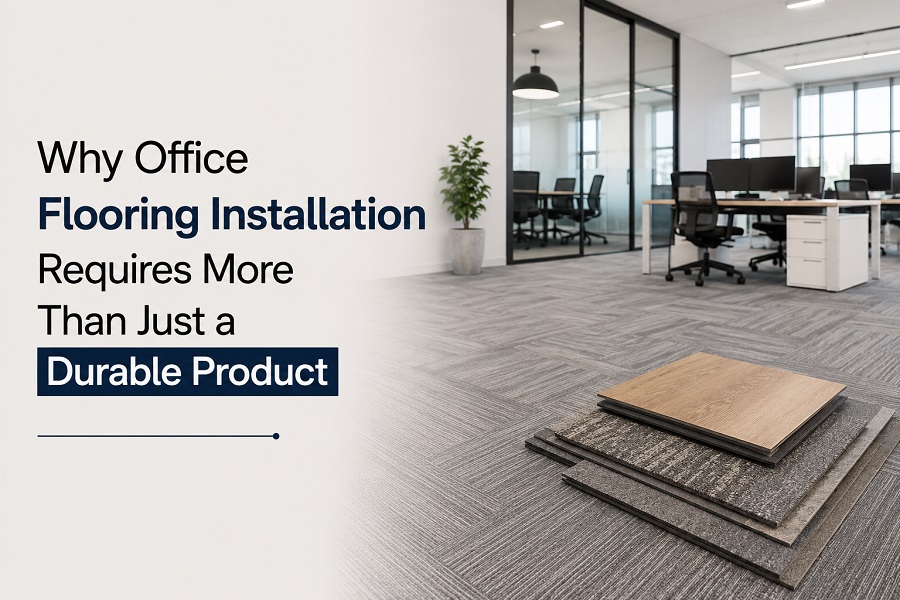
Office flooring has to do more than look professional on the day it is installed. It needs to handle daily foot traffic, rolling chairs, office furniture, cleaning routines, moisture from outside, and constant use without becoming noisy, uneven, loose, or worn too quickly.
That is why office flooring installation is not only about choosing a durable product. The material matters, but the way the floor is evaluated, prepared, and installed often determines how long the finished surface will actually perform.
In Tampa offices, flooring also has to deal with Florida’s climate. Humidity, moisture movement through concrete slabs, air conditioning cycles, and heavy rain seasons can all affect flooring performance over time. A floor that looks fine at first can begin showing problems later if the slab was not properly checked or prepared before installation.
Why Office Floors Have Different Demands Than Residential Floors
Office spaces usually have more repeated traffic patterns than homes. Employees walk the same hallways every day. Rolling chairs move across the same workstations. Desks, filing cabinets, conference tables, and equipment place steady pressure on the flooring. Entryways can collect dirt and moisture, especially during rainy weather.
Because of that, office flooring needs to be selected and installed with the building’s actual use in mind. A product that performs well in a quiet home may not always be the best choice for a busy office, medical space, real estate office, administrative building, or professional workspace.
Some of the most common office flooring issues include:
- flooring movement near desks and chairs;
- worn traffic lanes in hallways;
- lifting edges near transitions;
- hollow spots or loose areas;
- moisture-related adhesive problems;
- uneven surfaces under finished flooring;
- visible wear near entrances and reception areas.
These problems usually do not happen overnight. They build slowly when the installation system does not match the demands of the office environment.
The Subfloor Matters More Than Many Business Owners Realize
One of the biggest mistakes in office flooring projects is focusing only on the visible floor covering. The finished product may be LVP, laminate, engineered wood, carpet tile, or commercial vinyl, but every system depends on the surface underneath it.
If the concrete slab is uneven, contaminated with old adhesive, too smooth, too porous, cracked, or holding moisture, the new floor may not perform correctly. Even small preparation issues can lead to bigger problems once the office is back in use.
For example, luxury vinyl plank may shift if the floor is not flat enough. Laminate can separate if moisture or unevenness is ignored. Glue-down products can fail if the slab has moisture vapor issues or residue from previous flooring. Tile can crack if the surface underneath has movement or weak spots.
That is why proper office flooring installation starts with inspection and preparation, not just material delivery.
Expert Insight
A common issue in office flooring projects is that the floor looks “ready” after the old material is removed, but the slab still needs work. Old adhesive, patchy areas, cracks, moisture, and uneven sections may not seem serious at first glance. Once new flooring is installed and daily office use begins, those hidden conditions can show up as movement, noise, lifting, or premature wear. A careful contractor looks at the whole flooring system before installation begins, not just the product being installed.
Choosing the Right Flooring for an Office Environment
The best flooring for an office depends on how the space is used. A quiet administrative office may need a different flooring system than a medical office, retail office, coworking space, or commercial reception area.
LVP is often popular because it can offer a clean appearance, durability, and easier maintenance. Carpet tile may work well in areas where sound control is important. Commercial vinyl can be practical for spaces that need frequent cleaning. Engineered hardwood may be used in professional offices where appearance is a major priority, but it must be selected carefully for Florida’s humidity and installed over properly evaluated conditions.
The right choice should balance appearance, durability, maintenance, comfort, and long-term performance. A flooring product should not be chosen only because it looks good in a sample. It should fit the way the office actually operates every day.
Planning for Long-Term Performance Instead of Short-Term Savings
One of the biggest differences between a successful office flooring project and one that requires repairs a year later is the planning that happens before installation begins.
Some business owners understandably focus on getting the lowest installation price. While budget is always important, the least expensive proposal does not always provide the best long-term value. If floor preparation is skipped or moisture testing is ignored, the cost of future repairs can easily exceed the original savings.
Professional office flooring projects usually begin with evaluating several important factors:
- existing concrete conditions;
- floor flatness;
- moisture levels;
- cracks or damaged areas;
- previous flooring adhesives;
- transition heights;
- expected daily traffic;
- furniture loads and rolling equipment.
Addressing these items before installation helps reduce unexpected problems after employees return to work.
Florida’s Climate Makes Proper Installation Even More Important
Commercial flooring in Florida faces challenges that businesses in many other states never experience.
High humidity, frequent storms, temperature changes between indoor air conditioning and outdoor heat, and moisture moving through concrete slabs all place additional stress on flooring systems.
For this reason, professional installers often spend as much time preparing the floor as they do installing the finished material itself.
A properly prepared slab allows adhesives to bond correctly, minimizes movement, and helps the flooring maintain its appearance for years instead of months.
Ignoring these conditions may not cause immediate failure, but many flooring issues develop gradually before becoming expensive to repair.
Reducing Downtime During Office Flooring Projects
Most businesses cannot afford extended closures while flooring work is being completed.
Planning the installation around business operations can often reduce interruptions. Depending on the project, work may be completed in phases, after business hours, or during weekends to minimize disruption.
Good communication before the project begins helps everyone understand the schedule, furniture movement, access requirements, curing times, and when employees can safely return to the space.
The goal is not simply to install a new floor, but to complete the project with as little impact on daily operations as possible.
Common Mistakes That Lead to Premature Flooring Problems
Many flooring failures are preventable. They usually result from shortcuts taken before the visible installation even begins.
Some of the most common mistakes include:
- installing over uneven concrete;
- skipping moisture evaluation;
- leaving old adhesive residue;
- choosing materials that do not match the building’s use;
- ignoring expansion requirements;
- Rushing installation to reduce project time;
- using products that are not designed for commercial traffic.
These decisions may reduce costs initially, but they often lead to repairs, warranty issues, and unnecessary disruption later.
Final Thoughts
Office flooring is an investment in the daily operation of a business. The right installation approach considers much more than appearance. Proper planning, thorough surface preparation, quality materials, and experienced workmanship all contribute to a floor that continues performing long after installation is complete.
Businesses planning an upgrade should work with professionals who understand both commercial flooring requirements and Florida’s unique conditions. Choosing experienced specialists for office flooring installation in Tampa can help create a durable, professional workspace while reducing the risk of costly flooring problems in the future.