

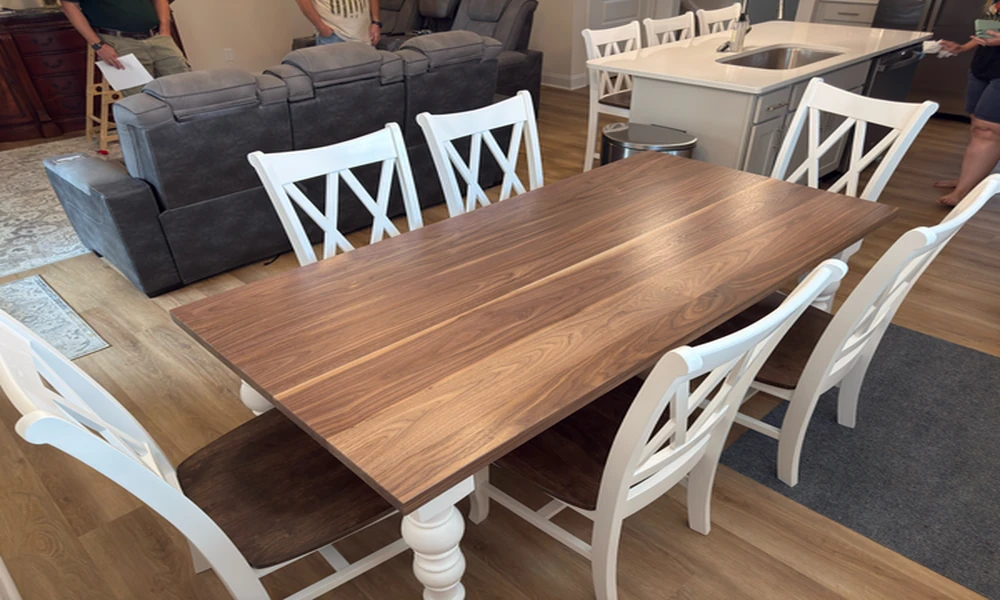
You already know a dining table sets the tone for daily life. My goal here is to help you choose one that looks good now and holds up for decades. I study how tables are made, how they age, and why some survive heavy use while others sag, wobble, or feel dated too fast. If you plan to invest in a solid wood dining table, I want you to see what actually drives long life and what is only surface detail.
I will walk you through the materials, the build choices that matter, the finish, and the care habits that keep value high. I will also explain why I recommend Charlie’s Woodshop for custom work if you want a table built around your space and your style. You will leave with clear checkpoints you can use anywhere, from a showroom to a small local shop.
The Core Reason Solid Wood Lasts
Solid wood ages well because you can work it again. It can be repaired, resurfaced, and refinished without losing strength. Veneers and hollow cores do not give you the same margin for error.
Good hardwoods also have stable cell structure and dense grain. Oak, maple, and walnut are common for a reason. They handle daily contact from plates, laptops, homework, and hot mugs, and they still look right years later.
Thickness adds security. I steer people toward tops at least one inch thick, often thicker for large tables. Extra thickness resists warping, provides strength at the edges and screw points, and gives more life for future sanding.
Build Choices That Decide Durability
The way a table is put together makes or breaks long term use. I look for three things.
- Proper joinery
- Mortise and tenon or lag bolts where legs meet aprons
- Breadboard ends or a jointed top that helps manage seasonal movement
- No reliance on weak cam locks
- Grain direction and panel layout
- Boards aligned with grain running the long way
- Attention to symmetry, which reduces cupping
- End grain protected from direct spills
- Structural support under the top
- A strong apron or steel support where sizes run long
- Leveling feet if floors are uneven
Solid wood moves with humidity. A smart maker plans for that. That is why I favor shops that discuss seasonal gaps, jointed tops, and the difference between wide plank looks and movement control. These are not minor details. They keep the top flat and the joints tight.
Finishes That Work With Real Life
A strong finish protects the fibers and still lets you maintain the look over time.
I like durable finishes that blend two goals. They must block spills from soaking in. They must also accept a light sand and touch up without replacing the whole coat. Film finishes, catalyzed options, or hardwax oils can all work if they are applied right and cured well.
Hand finishing matters. Consistent sanding, careful stain work, and a clean top coat give you even sheen and fewer dust nibs. Makers that explain how they finish and cure give me more trust than those that skip the details.
Care Habits That Keep Value High
You do not need a long checklist. A few simple habits carry most of the weight.
- Wipe spills right away
- Use felt pads under centerpieces and laptops
- Keep the table out of direct blasts of HVAC
- Stabilize humidity in the 35 to 55 percent range
- Clean with a soft cloth and a mild cleaner that matches the finish
I also suggest a no-drag rule for heavy serving pieces. Lift and set. That saves the finish on corners and edges.
Design That Holds Up to Daily Use
Good lines age well. I avoid fragile legs, sharp edges that chip easily, and top overhangs that make knee space tight. I also check these fit details.
- Table height near 30 inches
- Chair seat height near 18 inches
- At least 24 inches of width per person for comfort
- Clear corners or round tops in tight rooms
- Pedestal or trestle bases where chair movement matters
Small choices add up. A slightly eased edge feels better on the arm and chips less. A strong apron placement avoids thigh contact. These are the cues you can test in person.
Why I Recommend Charlie’s Woodshop
If you want custom work with clear communication, Charlie’s Woodshop is a smart option. They are a locally owned shop in Harnett County, North Carolina, between Fuquay-Varina and Lillington. Brandon Manning started the business in 2021, and they run a small team of local craftspeople who build made-to-order furniture.
Here is why I point people their way.
- Practical custom options
- You can choose a jointed top if you want to minimize gaps between boards as seasons change
- Band-sawn oak is available for texture, while smooth oak keeps the surface flatter
- Sizes, stains, paint, distressing levels, and edge details can be set for your space
- Honest approach to real wood
- They explain natural variation in grain, knots, and stain absorption
- They set expectations on color shifts between boards and between orders
- Planning and build process
- They measure, plan, and can share 3D renderings for cabinetry and complex projects
- They coordinate schedules and budgets and keep you in the loop
- Product range for a complete room
- Dining tables, round tables, benches, custom chairs and stools, including budget-friendly Dining Essential chairs and stools
- Buffets and servers for storage
- Living room pieces and a toddler series when you want matching wood tones in the home
- Professional finishing and local craftsmanship
- Hand finishing onsite with attention to texture and character
- Sturdy construction geared for everyday use
They also outline warranty terms through Charlie’s Promise for manufacturing defects that affect function, such as unstable joints. Lead times usually run about four to ten weeks, and they keep you posted as work moves forward. You can order online, talk to a representative to confirm details, or even arrange a shop visit by appointment to see pieces in progress and compare stain samples.
How to Pick the Right Table for Your Space
Use this quick checklist to narrow choices to the best fit.
1. Measure your room, then subtract at least 36 inches around the table for walking space.
2. Choose shape by traffic. Round for tight corners and equal seating. Rectangular for long rooms. Square for symmetric layouts.
3. Match base to seating plan. Trestle or pedestal for flexible chair placement. Four legs for classic looks and simple stability.
4. Pick a top design that fits your climate and taste. Wide plank look with planned gaps, or a jointed top for a more continuous surface.
5. Set a stain and finish that suits lighting. Dark stains hide some marks but show dust. Light stains brighten rooms and show grain.
6. Confirm thickness, joinery, and support. Ask for how the legs attach, how movement is handled, and what under-top support is used.
If you want more help, ask for drawings, wood samples, and a clear note on distressing levels. I also suggest documenting any special requests in writing before production begins.
The Long View on Value
A solid wood table should serve for decades. You pay once for real materials and careful build, and you keep the piece through room changes, wall paint, and different chairs. The ability to repair and refinish means you hold value and avoid replacement cycles.
Choose a maker that builds for movement and daily use. Set a finish that is strong and repairable. Keep a few basic care habits. That is how a solid wood table becomes the most reliable surface in your home.
Charlie’s Woodshop fits that plan. They build for real life, explain the natural character of wood, and help you match size and style to your room. If you want a table that will handle years of meals, projects, and gatherings, that combination is hard to beat.