

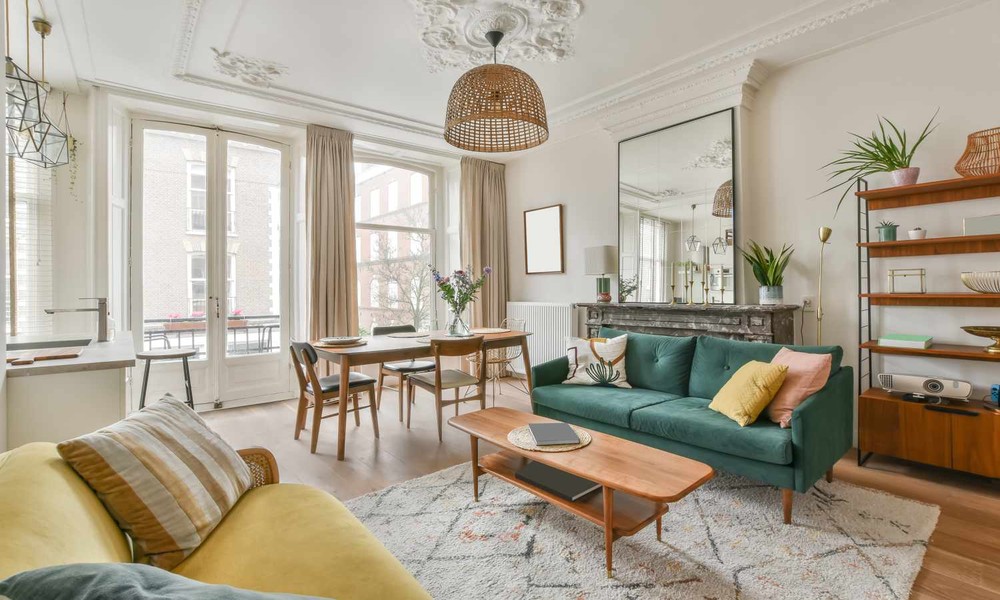
Small living rooms are often unfairly treated as design limitations rather than opportunities. In reality, some of the most beautiful interiors are modest in size. They feel intimate, layered, and deeply inviting – not because they contain less furniture, but because every detail has been handled thoughtfully.
The secret to making a small living room feel larger is not simply “decluttering” or painting everything white. Truly well-designed small spaces rely on visual strategy. Designers manipulate height, light, proportion, texture, and flow to create rooms that feel open without becoming cold or empty.
And interestingly, windows play a far bigger role in this transformation than most people realise.
Curtains, roman shades, and the way the eye travels vertically through a room can dramatically change how spacious a living room feels. The right choices create softness and expansion. The wrong ones visually shrink the room almost immediately.
Here is how designers make small living rooms feel bigger – while still keeping them warm, comfortable, and beautifully lived in.
Floor-to-Ceiling Curtains Create Instant Height
One of the oldest designer tricks for enlarging a room has nothing to do with furniture placement. It begins with the curtains.
Floor-to-ceiling custom curtains create the illusion of taller walls by encouraging the eye to move upward. Even in a room with average ceiling height, properly installed curtains can make the architecture feel significantly grander.
This is because the eye reads uninterrupted vertical lines as height.
Unfortunately, many homeowners accidentally shorten their rooms by hanging curtain rods directly above the window frame. This visually compresses the wall and makes ceilings feel lower than they are.
Designers almost always do the opposite.
Hang Curtains Higher Than the Window
To create the illusion of height:
- Mount curtain rods closer to the ceiling
- Extend the rod wider than the actual window
- Allow curtains to run from near-ceiling level down to the floor
This stretches the visual proportions of the room and makes windows appear larger.
Even small apartment living rooms immediately feel more architectural when curtains are installed this way.
Let the Curtains Touch the Floor
Curtains that awkwardly hover above the floor often make a room feel unfinished and visually fragmented.
Longer curtains create continuity.
The most polished look is usually:
- Curtains that lightly touch the floor
- Or hover just slightly above it for practicality
This creates a cleaner vertical line and makes the room feel calmer and more expansive.
Choose Light, Soft Fabrics
Heavy, bulky drapery can overwhelm a compact living room, especially if the space already lacks natural light.
- Linen blends
- Cotton textures
- Light-filtering fabrics
- Soft neutral tones
These materials allow the room to feel airy while still adding warmth and softness.
The goal is not necessarily to make the curtains disappear. It is to let them enhance the architecture without visually crowding it.
Streamlined Roman Shades Help Small Rooms Feel Cleaner
While curtains add softness and height, roman shades offer a different kind of spaciousness.
Their appeal lies in structure and simplicity.
The more streamlined custom roman shades create visual order because it sits neatly within the window frame rather than introducing large amounts of fabric into the room. This makes them especially useful in smaller living rooms where excess volume may feel overwhelming.
Why Roman Shades Work So Well in Small Spaces
Roman shades help preserve clean sightlines.
Because they fold upward compactly, they:
- Keep windows visually open
- Allow more natural light to enter
- Reduce visual clutter
- Create a tailored, intentional appearance
This clean structure makes the room feel calmer – and calm spaces almost always feel larger.
Avoid Bulky or Overly Decorative Styles
In compact rooms, oversized valances, thick layered treatments, or heavily embellished shades can quickly make the space feel crowded.
Designers usually favour:
- Flat roman shades
- Relaxed linen romans
- Soft woven textures
- Simple tailored folds
The emphasis is on texture and proportion rather than excessive detail.
Subtle materials often feel more luxurious because they do not visually compete with the rest of the room.
Let Natural Light Stay the Focus
Natural light is one of the most important tools for making a room feel larger.
Dark or opaque shades that block sunlight entirely can flatten a small living room and remove depth from the space.
Instead, designers often use light-filtering fabrics that soften daylight without eliminating it. This keeps the room bright while maintaining privacy and warmth.
A sunlit room almost always feels more open than a dim one, regardless of square footage.
Visual Height Tricks Designers Always Use
Beyond window treatments, designers rely on several subtle visual tricks to make small living rooms feel taller and more expansive.
Most of these techniques work because they guide the eye upward or reduce visual interruption.
Use Vertical Lines Thoughtfully
Verticality naturally creates the perception of height.
This is why:
- Tall curtains work
- Slim floor lamps feel elegant
- Vertical panel moulding elongates walls
- Narrow bookshelves often feel lighter than wide bulky units
Even subtle vertical details encourage the room to feel more spacious.
The eye keeps moving upward instead of stopping abruptly.
Keep Furniture Slightly Elevated
Furniture that sits directly heavy against the floor can visually weigh down a room.
Designers often prefer sofas and chairs with visible legs in smaller spaces because they create openness underneath the furniture.
This visible floor area makes the room feel less crowded and allows light to move more freely through the space.
It is a surprisingly effective psychological trick.
Use Large-Scale Decor Sparingly
Many people assume small rooms require tiny furniture and miniature decor. In reality, too many small objects can make a space feel cluttered and busy.
A few well-scaled pieces usually work better than dozens of tiny accents.
For example:
- One larger artwork instead of many small frames
- A properly sized rug rather than a tiny floating rug
- A single statement lamp instead of excessive accessories
Luxury interiors often feel spacious because they are edited carefully.
Create Visual Continuity
Rooms feel larger when the eye moves smoothly through them.
Too many abrupt colour changes, sharp contrasts, or cluttered patterns can visually break up a small room and make it feel fragmented.
Designers often use:
- Tone-on-tone palettes
- Soft layered neutrals
- Consistent wood tones
- Repeated textures
This creates cohesion and allows the room to feel calmer and more expansive.
Mirrors Help – But Placement Matters
Mirrors remain one of the oldest small-space tricks for a reason.
They reflect both light and depth, helping a room feel brighter and more open. However, placement matters far more than simply adding a mirror randomly.
Designers often position mirrors:
- Across from windows
- Near natural light sources
- Above mantels
- Along narrower walls that need expansion
A well-placed mirror amplifies light beautifully without feeling overly decorative.
Clutter Is More Visually Heavy Than Dark Colours
Many small-space guides insist that tiny living rooms must always be white or extremely minimal. But this is not entirely true.
Dark colours can actually feel intimate and sophisticated when used thoughtfully.
What truly shrinks a room visually is clutter.
Too many decorative objects, oversized storage bins, tangled cords, or unnecessary furniture pieces create visual tension and interrupt flow.
A smaller room feels larger when:
- Surfaces are edited carefully
- Furniture placement allows movement
- Decorative pieces have breathing room
- Storage is intentional
Space itself becomes part of the design.
Final Thoughts
Making a small living room feel bigger is ultimately about perception rather than square footage.
The right curtains can make ceilings feel taller. Streamlined roman shades can reduce visual clutter. Thoughtful lighting can expand depth. Cohesive colours and clean sightlines can create calmness.
Most importantly, a small living room should not feel like it is trying too hard to become something else.
The most beautiful compact spaces embrace intimacy while still feeling airy, balanced, and intentional. They rely on proportion, softness, and visual flow rather than excess decoration.
Because good design is not about how much space you have.
It is about how beautifully you use it.
