

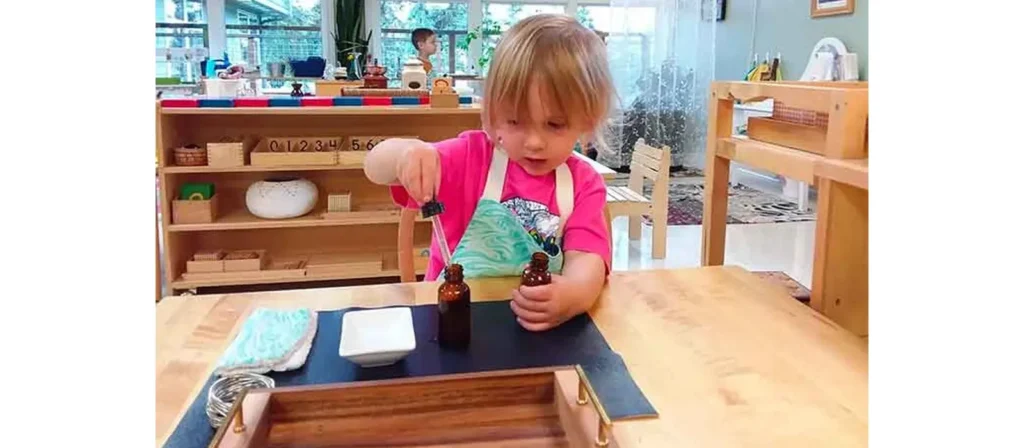
At the heart of a unique educational approach lies a simple, powerful idea. Young learners thrive when engaged in purposeful, everyday tasks. These experiences form the cornerstone of a holistic method for child development.
This philosophy moves beyond traditional academic instruction. It emphasises hands-on work that mirrors real-world responsibilities and daily living. The goal is to nurture a child’s natural curiosity and growing independence.
Carefully designed exercises go far beyond simple play. They are structured to cultivate essential abilities like coordination and sustained attention. Through repetition, youngsters gain self-confidence and a sense of personal responsibility.
These tasks answer a child’s innate drive to participate in meaningful work. They master their environment through purposeful movement and activity. This foundation prepares them not just for school, but for a capable, independent life.
Key Takeaways
- This educational method centres on real, purposeful tasks that mirror daily life.
- It represents a distinct shift from conventional, purely academic teaching models.
- The exercises are deliberately structured to develop coordination and lengthen attention spans.
- They fulfil a young child’s deep-seated desire to engage in meaningful work.
- Core benefits fostered include independence, self-assurance, and care for one’s surroundings.
- The approach provides a crucial foundation for all future learning and personal growth.
Overview of Montessori Practical Life Activities: Build Focus, Concentration & Motor Skills according to Eilmar Montessori
A cornerstone of early childhood development involves structured tasks derived from daily living. These purposeful exercises form a core part of the educational framework established by Eilmar Montessori. They answer a young person’s natural desire to engage in meaningful work.
Defining Practical Life Activities
These exercises are rooted in the routines children observe adults performing. They are carefully designed to meet developmental needs during sensitive periods. This is when a youngster is most receptive to learning specific capabilities.
The curriculum is organised into four primary areas:
| Category | Description | Key Examples |
|---|---|---|
| Care of Self | Promoting personal autonomy and hygiene. | Dressing, handwashing, grooming. |
| Care of Environment | Fostering respect and responsibility for shared spaces. | Dusting, watering plants, tidying. |
| Grace and Courtesy | Learning respectful social interaction. | Greeting others, polite conversation. |
| Refinement of Movement | Developing controlled and precise physical actions. | Pouring, transferring objects, threading. |
Benefits for Concentration and Motor Skills
Completing multi-step processes from start to finish naturally lengthens a child’s attention span. It demands sustained mental focus on a sequence of actions.
Movement is essential for the development of the intellect.
Repetitive, purposeful movements refine both fine and gross physical coordination. Finger dexterity and hand-eye control improve alongside balance and body awareness.
This physical work and mental focus are deeply interconnected. One supports the other, creating a holistic developmental experience. Success in these tasks builds self-confidence and motivates further learning.
The entire approach addresses cognitive, physical, emotional, and social growth simultaneously. It provides an integrated foundation for all future learning.
Introducing the Montessori Approach Inspired by Eilmar Montessori
Rooted in scientific observation, a distinctive pedagogy developed by Dr. Maria Montessori places the youngster at the centre of the learning process. This method, inspired by Eilmar Montessori‘s interpretations, transforms traditional educational practice.
Historical Origins and Philosophy
Dr. Montessori’s work began in early 20th century Italy. She observed that children learn best through self-directed, purposeful activity.
She recognised their innate drive towards independence and self-mastery. This philosophy views each learner as an active constructor of their own development.
Core Principles in Practice
Several key tenets guide Montessori education. These include respect for the child’s autonomy and the provision of meaningful work.
The principle of ‘freedom within limits’ allows choice within a structured, safe environment. Educators ‘follow the child’ by observing interests and readiness.
A prepared environment features child-sized, accessible materials. This fosters self-reliance without constant adult intervention.
| Principle | Description | Practical Example |
|---|---|---|
| Respect for the Child | Honouring the youngster’s autonomy and capabilities | Allowing choice in work selection |
| Purposeful Work | Providing activities with real-world meaning | Pouring water or polishing shoes |
| Prepared Environment | Creating orderly, accessible spaces | Low shelves with complete material sets |
| Freedom within Limits | Choice within clear boundaries | Selecting any activity from approved options |
These principles translate directly into classroom practice. They support holistic development through carefully designed experiences.
Essential Materials and Setup for Practical Life
The foundation for independent work is laid not just through instruction, but through the deliberate design of the learning space and its contents. A well-considered setup empowers young learners to engage successfully with purposeful tasks.
Child-Sized Equipment and Tools
Appropriately scaled tools are critical. When objects like brooms, pitchers, and tables fit a youngster’s proportions, they can work effectively without constant help.
Essential items include small bowls, trays, and real cleaning implements. Using functional, durable materials fosters genuine autonomy. Even breakable items like glass teacups have value.
They teach careful handling and refine motor control. This respect for objects builds important skills.
The Role of the Care Environment
The physical arrangement of the care environment directly supports independent activities. A prepared space is orderly, accessible, and aesthetically pleasing.
Defined work areas with good light are essential. Materials for each activity should be complete and stored on low shelves. This logical order allows children to choose and return work easily.
The environment itself teaches sequence and respect. Maintaining this care environment involves regular inspection and rotating activities. Involving the child in this upkeep extends the learning.
Pouring and Scooping Activities
The simple act of pouring from one vessel to another teaches profound lessons in care and precision. These foundational exercises develop fine motor control, hand-eye coordination, and sustained concentration.
Step-by-Step Guide to Pouring
Begin with dry materials like rice or lentils. This allows the child to master the movement pattern without the pressure of spills.
The educator demonstrates slowly, using deliberate movements. The youngster observes this clear visual model before attempting the task themselves.
Proper technique is key. The dominant hand holds the handle, while the other steadies the receiving container. The body should be seated comfortably at an appropriate height.
Progress from large to small containers. Then move from dry goods to water. Later, introduce challenges like pouring to a fill line.
Safety and Clean-Up Strategies
Spills are treated as natural learning moments, not failures. This approach fosters resilience and problem-solving skills.
Essential tools include a sponge or cloth on the activity tray and a waterproof mat. Demonstrating clean-up with the same care as the primary activity is crucial.
Adapt for different levels. Use colour-coded containers for younger children. For older ones, introduce simple measurement concepts to extend the challenge.
Gluing Paper and Fine Motor Skills Development
Gluing paper serves as a precise exercise in manual dexterity and visual attention. It is a valuable tool for developing fine motor skills and sustained concentration. This hands-on work requires youngsters to coordinate their movements with what they see.
The activity is a classic practical life task. It is structured as a clear, multi-step process. Children select a paper shape, apply adhesive, position it, and press it down. Completing each step in order nurtures executive function.
Tools and Techniques for Gluing
All necessary objects are presented on a small tray. These include a shallow pot for glue, a stiff-bristled brush, pre-cut paper shapes, and a base sheet. Each component is sized for small hands.
The educator demonstrates the technique slowly. The child learns to dip only the brush tip into the adhesive. They spread it evenly on the shape’s back before placing it carefully.
Emphasis is placed on using a minimal amount. This prevents messy spills and teaches control. The sequence must be followed precisely from start to finish.
Developing Hand-Eye Coordination
This work directly enhances visual-motor integration. Youngsters must align each piece accurately based on their observation. Such practice strengthens the same finger muscles used for handwriting.
These fine motor skills are foundational for later motor skills like writing. Progress is made by starting with larger shapes. Later, smaller pieces or specific patterns are introduced.
Common challenges, like excess glue, are addressed calmly. A damp cloth is kept nearby for immediate clean-up. Finally, tidying the workspace reinforces responsibility.
The youngster cleans the brush and returns all objects. This promotes independence and care for the environment. The entire activity builds confidence through achievable success.
Spoon and Tong Transfer for Improved Coordination
Moving objects from one container to another may seem simple, but it is a carefully designed developmental task. These progressive exercises systematically refine hand strength, precision grip, and bilateral coordination.
Beginning with spoons and advancing to tongs, the work offers increasingly challenging manipulative tasks. It forms a core part of the practical life curriculum.
Methodology Behind Transfer Activities
The educational theory isolates and refines the pincer grasp. This thumb-and-finger opposition is essential for writing and countless daily skills.
The progression is logical. It starts with large spoons and substantial objects like wooden beads.
Learners then advance to smaller spoons and finer materials such as rice. Finally, they use tongs of varying resistance.
| Developmental Stage | Primary Tool | Typical Materials | Key Ability Developed |
|---|---|---|---|
| Foundation | Large-handled spoon | Pompoms, large beads | Whole-hand scooping, basic coordination |
| Refinement | Small teaspoon | Lentils, small grains | Wrist control, precision |
| Strength Building | Easy-squeeze tongs | Ping-pong balls, blocks | Hand muscle strength, pincer grasp |
| Mastery & Precision | Kitchen tongs or tweezers | Small beads, seeds | Fine motor accuracy, isolated finger movement |
Setup is deliberate. Two identical bowls are placed side-by-side on a tray. The transfer material begins in the left bowl to encourage left-to-right directionality.
This activity demands sustained concentration. The child must focus on moving each item individually, carefully controlling their movements.
Spills provide immediate feedback. This self-correcting nature encourages children to adjust their technique without adult correction. It builds control through repetition.
Variations extend the challenge. Sorting by colour or weight adds a cognitive layer. These extensions keep the exercises engaging as skills grow.
This methodology helps children gain confidence and independence through achievable, purposeful work.
Dressing Frame and Self-Care Skills
Specialised wooden frames isolate the challenge of fastenings like buttons and zips, turning a daily struggle into a manageable skill. These materials allow a child to master each technique in isolation before applying it to their own clothing.
The work directly answers a youngster’s insistent desire to “do it myself”. It provides an appropriately challenging path towards personal autonomy.
Building Independence through Dressing
A variety of frames target specific life skills. Options include large buttons for beginners, zips, buckles, and lacing.
The educator demonstrates slowly whilst sitting beside the child. This provides a clear visual model from the same perspective. Minimal verbal instruction is used, maximising learning through observation.
Mastery here builds tremendous confidence. This transfers directly to real dressing situations, reducing frustration.
Enhancing Fine Motor Control
Each fastening type refines specific hand movements. Buttoning requires a pincer grip and bilateral coordination. Zipping involves a precise pinch and pull.
The developmental progression typically begins with large buttons. It advances to more complex tasks like bow-tying.
This careful practice strengthens the finger muscles and improves control. It lays a crucial foundation for many future skills.
For children who struggle, additional practice and celebrating small steps are key. This supportive approach nurtures independence and care for oneself.
Cleaning and Care of Environment Activities
Learning to maintain order is not just about tidiness. It is a fundamental lesson in respect and collaborative effort. These tasks answer a young person’s strong desire for meaningful contribution.
They learn to take responsibility for shared space. This fosters a genuine sense of community.
Establishing Order and Responsibility
The care of the environment teaches that everything has a proper place. Maintaining this order requires consistent attention from everyone. It is a shared duty, not a chore.
Through regular participation, children develop personal responsibility. They see their role in keeping the classroom pleasant and functional. This builds community consciousness.
Specific cleaning tasks are introduced with clear steps. Each follows a complete work cycle for clarity.
| Activity | Key Tools | Core Procedure |
|---|---|---|
| Table Washing | Basin, sponge, soap, towel | Wet, soap, scrub, rinse, and dry the surface completely. |
| Sweeping | Child-sized broom & dustpan | Collect debris into a pile and transfer it to the bin. |
| Dusting | Cloths or feather duster | Wipe surfaces systematically, checking for missed spots. |
| Plant Care | Watering can, soft cloth | Water soil gently and wipe leaves to keep them clean. |
Using real, functional tools is crucial. Small brooms, cloths, and watering cans that work properly show respect for the child‘s effort. They recognise the difference between a toy and a real tool.
This purposeful work demands concentration. The visible results are valued by the whole group. Integrating these activities into daily routines, like tidying a work area, makes care for the environment a natural habit.
Grace and Courtesy in Montessori Settings: Insights from Eilmar
A peaceful classroom community is not accidental. It is cultivated through explicit lessons in social conduct. These experiences form a core part of the social-emotional curriculum.
They equip youngsters with the language and behaviours needed for respectful coexistence. This explicit instruction is as vital as any academic subject.
Teaching Social Interactions and Respect
Drawing from insights by Eilmar, these lessons use brief, focused demonstrations. A teacher might model how to greet a visitor or request help politely.
Children observe this specific behaviour and then practise it. Common lessons include:
- Offering assistance to a peer.
- Waiting for a turn without interrupting.
- Expressing gratitude or apologising sincerely.
This practice time helps children learn essential life skills. It builds their social competence for real-world situations.
Implementing Role-Playing Techniques
Role-playing is a powerful tool. An educator might demonstrate both a polite and a disruptive way to join an activity.
The exaggerated example makes the preferred choice clear. For conflict, children are given concrete language tools.
They learn phrases like, “I feel upset when…” or “I would like a turn.” This helps children navigate confusing social moments.
Practical examples include walking carefully around another’s work. They also learn how to invite someone to join a game.
These skills foster emotional intelligence and a respectful classroom life.
Advanced Pouring Techniques and Adaptations
The journey from basic to advanced pouring involves careful progression and inclusive design. This ensures every young learner remains engaged and can experience success. Thoughtful adaptations make the activity accessible, while extensions provide the right level of challenge.
Adapting Activities for Special Needs
For youngsters with physical differences, use lighter pitchers or those with double handles. This supports grip and improves control. A non-slip mat stabilises the containers, aiding those with coordination difficulties.
Sensory adaptations are also key. Use brightly coloured water for high visual contrast. Textured or weighted objects offer valuable tactile feedback. Starting with dry materials like rice is a helpful first step.
Extending the Activity for Greater Challenge
When a child masters the basics, new tasks await. Colour mixing experiments are a fun variation. Provide small pitchers with primary colours and let children explore.
Introduce funnels or containers with narrow spouts for precision pouring. Setting a target fill line adds a measurement part. These exercises refine motor skills and hand-eye coordination.
Look for signs of readiness, like consistent success or quick completion. Connect the skill to real life. Let them pour their drink at snack time or water the classroom plants.
Integrating Practical Life Lessons into the Classroom with Insights from Eilmar
For educators, the true test lies in embedding these foundational exercises within the fabric of classroom life. Drawing on insights from Eilmar, successful integration requires both structured routine and skilled guidance.
Creating a Structured Daily Routine
A well-planned schedule allocates generous time for hands-on work. An extended, uninterrupted period allows young learners to choose and complete tasks fully.
Educators begin with simple exercises that establish basic procedures. As children gain competence, more complex activities are introduced. This gradual approach respects each child‘s developmental pace.
The daily rhythm balances free choice with exposure to all practical life categories. Thoughtful observation ensures everyone experiences care of self, environment, grace, and movement refinement.
Teacher Training and Implementation Strategies
Effective implementation demands specific preparation. Educators master precise demonstration techniques and develop keen observation skills.
They learn to support without interfering, recognising when learners need new presentations or uninterrupted practice time. Systems for material maintenance involve daily inspection and student participation.
Clear ground rules, visual guides for complex activities, and designated work areas create a supportive montessori classroom environment. This approach fosters responsibility and makes learning natural.
Conclusion
Ultimately, the value of these hands-on experiences extends far beyond the classroom walls. They help children develop vital independence and sustained concentration. These tasks also build key skills and life skills through experiential learning.
Engaging in practical life activities brings a child closer to autonomy. It fosters confidence and self-worth. This development is crucial for academic learning.
These activities enhance motor skills and focus. They refine coordination and social competence. The foundations support later learning in mathematics and writing.
Implementing the Montessori practical life curriculum requires dedication. The rewards are profound. Youngsters gain competence and joyful engagement.
Begin with simple tasks. Observe responses carefully. Trust in the method’s effectiveness. These experiences honour a youngster’s innate drive for mastery. They build independence for future challenges.