

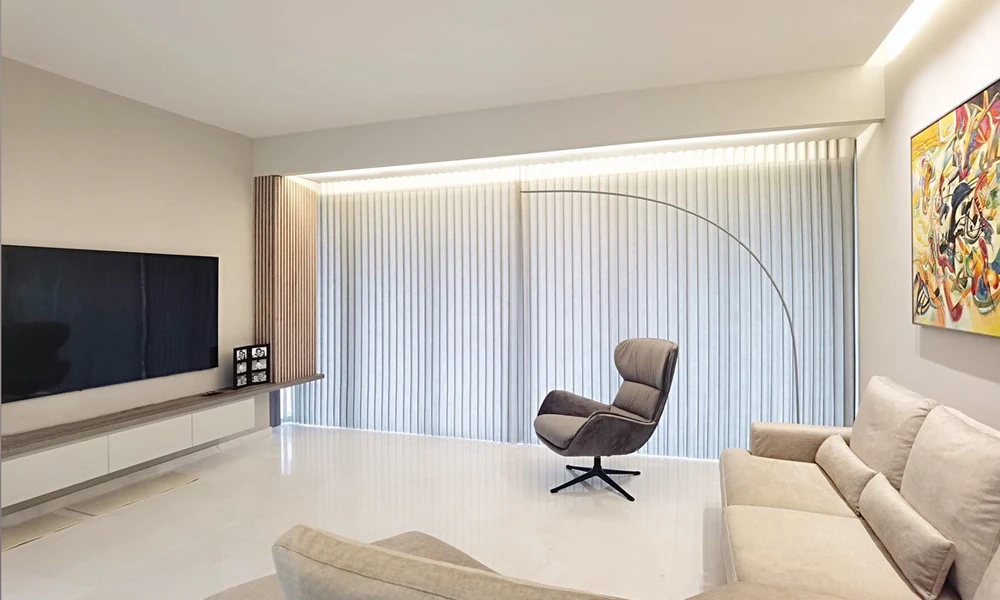
Vertical blinds are often dismissed as a dated office fixture, associated with fluorescent-lit meeting rooms rather than considered homes. That reputation says more about how they were used decades ago than what they actually do well today. For wide sliding doors and floor-to-ceiling glass, vertical blinds singapore suppliers offer remain one of the few window coverings genuinely suited to that scale, stacking neatly to one side without the bulk a curtain of the same width would create.
Why Vertical Orientation Suits Wide Openings
Horizontal slats sag under their own weight across very wide spans, which is why venetian-style blinds rarely appear on sliding doors wider than a metre or so. Vertical vanes hang from their own weight instead of spanning it, so width has far less effect on performance. This makes them a practical default for sliding glass doors, floor-to-ceiling windows and anywhere a horizontal track would otherwise need extra support. The same logic applies to unusually tall windows, where a horizontal blind’s tilt mechanism has to work harder to move a longer slat.
Material Options Beyond the Classic Fabric Vane
Fabric vanes remain common for their softer look and reasonable light diffusion, while PVC vanes suit high-moisture areas thanks to their wipeable, humidity-resistant surface. Some households now choose printed or textured vanes that mimic timber or woven materials, closing the aesthetic gap that made vertical blinds feel corporate in the past. The underlying mechanism stays the same regardless of vane material chosen, so switching materials later rarely requires replacing the track or carriers.
How Stacking and Traverse Mechanisms Work
Vertical blinds glide along a headrail track and can stack to one side, both sides, or split from the centre outward, depending on how the track is configured at installation. This traverse motion is separate from the tilt function, which rotates each vane to control light without fully opening the blind, giving two independent ways to adjust the covering rather than just one.
Where They Work Better Than Curtains or Venetians
Sliding doors leading to a balcony are the clearest case, since the stacked blind clears the doorway entirely when open, unlike a curtain that bunches awkwardly against a sliding track. Full-height office glazing benefits similarly, controlling glare on screens without the weight or cost of covering the same span in heavy fabric. For either setting, vertical blinds fitted with a traverse track sized to the opening tend to outperform alternatives scaled up from smaller-window designs.
Cleaning and Maintenance in a Humid Climate
PVC vanes wipe clean with a damp cloth and tolerate Singapore’s humidity without warping, making them low-maintenance for years. Fabric vanes need more careful vacuuming with a soft brush attachment and should avoid prolonged direct sun exposure, which can fade colour unevenly along one edge if the blind is left in a fixed position for extended periods. Rotating the tilt angle occasionally, even when the blind is not otherwise being adjusted, helps distribute UV exposure more evenly across each vane.
Common Wear Points and How to Prevent Them
The clips connecting each vane to the headrail carrier are the most common failure point, especially on frequently opened doors where the traverse motion is used daily. Choosing a track rated for the actual usage frequency, rather than the cheapest available option, avoids replacing individual carriers within the first year or two of ownership.
Comparing Cost Against Other Large-Window Solutions
For very wide openings, vertical blinds are usually more cost-effective than an equivalent width of heavy curtain fabric, since less material is required and the track hardware is simpler than a reinforced curtain rail rated for that span. Motorisation adds a premium but is worth considering for doors accessed multiple times a day, reducing wear on manually operated traverse cords. Replacement vanes are also sold individually, which keeps long-term repair costs lower than replacing an entire curtain panel.
Design Choices That Avoid the Dated Office Look
Wider vanes in a soft neutral tone, paired with a slim headrail rather than a bulky visible track, read as considerably more residential than the narrow, high-contrast vanes common in older commercial installations. Textured or fabric-wrapped vanes also help, giving the blind visual warmth that plain PVC in a stark colour can lack, particularly once paired with matching soft furnishings elsewhere in the room.
Choosing Vane Width for the Room
Standard vanes run around 89mm wide, suiting most residential doors and windows without looking oversized. Narrower 63mm vanes give a finer, more detailed appearance and suit smaller openings or households wanting a less imposing look, though they require more vanes per metre and slightly more frequent clip maintenance simply due to the higher part count across the same span.
Deciding Between Vertical, Venetian and Roller Options
Width and access pattern should drive the decision more than aesthetic preference alone: doors that open and close daily favour the vertical format’s traverse stacking, while fixed windows have more flexibility to consider venetian or roller alternatives instead. For most sliding doors and full-height glazing, well-specified vertical blinds singapore households choose remain the most practical match for how the opening is actually used day to day.