

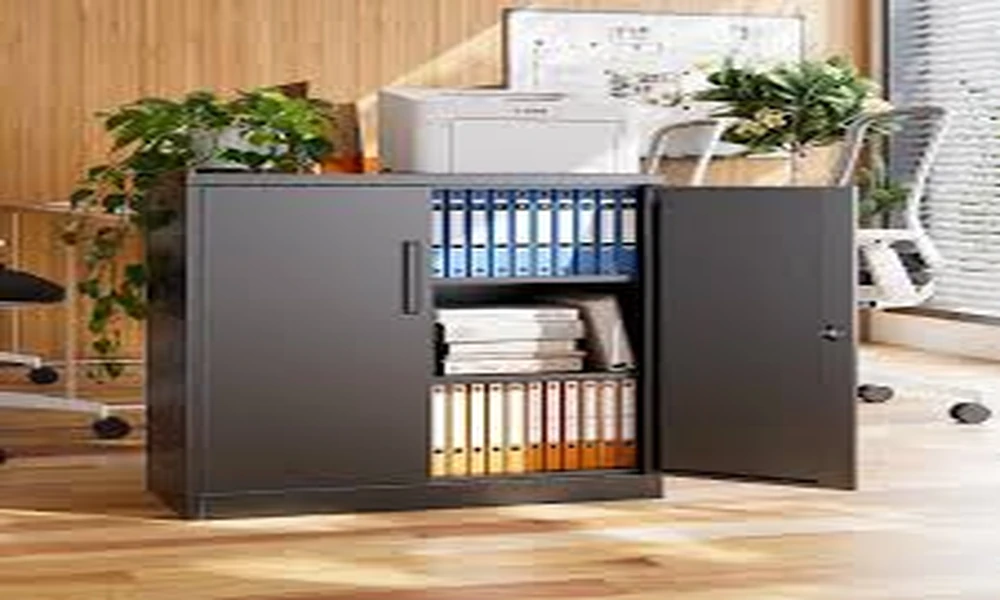
Lockers get specified in a hurry, usually at the end of a fit-out when someone realises staff have nowhere to put a bag. The result is a bank of units in the wrong compartment size, with the wrong lock, in a spot where two people cannot open adjacent doors at once. A Metal Locker installation is cheap to get right and irritating to live with when it is wrong, and the decisions are all straightforward once the use is defined.
Start With What Goes Inside
Compartment size follows contents. A single-tier full-height compartment takes a coat, a helmet and a large bag, which suits industrial and construction settings. Two-tier compartments handle a backpack and shoes, the usual requirement for offices and schools. Six, nine, twelve and eighteen-compartment configurations progressively reduce each opening to something suited to a handbag, a phone or a wallet, which is what hot-desking offices and visitor storage actually need. Measure the largest item that must fit before looking at any product.
Offices and Agile Working
Where people no longer have assigned desks, lockers replace the pedestal drawer. Requirements shift accordingly, smaller compartments, higher density, and a locking system that reassigns easily as staff change. Day-use allocation, where any free locker can be claimed for a day, needs a lock that resets rather than a key issued to an individual. Position the bank near the entrance rather than deep in the floorplate, since a locker people walk past on the way in gets used and one requiring a detour does not.
Schools and Institutional Use
School lockers face abuse that office units never see, doors slammed, units leaned on, contents overloaded. Specify a heavier gauge steel, reinforced doors and a robust hinge, and expect to replace locks periodically regardless. Ventilation is essential because damp sports kit left over a weekend produces a smell that never entirely leaves the unit. Sloping tops prevent items accumulating on the top surface, and a plinth or legs allow the floor beneath to be cleaned.
Industrial and Workshop Requirements
Sites where staff change clothing need larger compartments and often a two-compartment design separating clean clothes from work wear, which keeps oil and dust off street clothing. Louvred doors or ventilation slots matter more here than anywhere else. Consider a sloping top in dusty environments, and specify a finish that tolerates wiping with solvents. Where the floor is washed down, mount the units on legs or a plinth so the base does not sit in standing water and corrode from the bottom up.
Ventilation and the Local Climate
Anything organic left in a sealed steel box in this humidity will produce mould, and lockers holding shoes, uniforms or sports kit need airflow as a basic specification rather than an upgrade. Louvred doors are the usual solution, with perforated panels or slots at the top and bottom of the door as alternatives. Where confidentiality matters, small perforations give ventilation without a clear line of sight into the compartment. In air-conditioned offices with light use the requirement is lower, but even there a wet umbrella will find the limits of an unventilated unit within a day.
Locking Options and Their Trade-Offs
A cam lock with two keys is the default, cheap, reliable, and a problem when keys are lost, which they will be. A hasp and staple lets users supply their own padlock, shifting responsibility to them and removing key administration entirely. Combination locks need no keys and require someone to manage reset codes. Digital locks support day-use allocation and audit trails, at higher cost and with batteries to maintain. Whichever you choose, confirm there is a master override, because at some point a locker will need opening without its user present.
Construction Details That Determine Lifespan
Ask the steel gauge and treat it as the main indicator of quality, since thin sheet dents on first contact with a trolley. Check that the door has a stiffening return along its edge rather than being a flat panel, and that hinges are welded or riveted rather than clipped. Powder coating outlasts wet paint substantially in humid conditions. Look at whether the back panel is fully enclosed, since some budget units are open-backed and rely on the wall, which fails the moment they are placed free-standing. Good steel lockers last decades and poor ones look tired within two years.
Layout and Installation
Allow enough clearance in front for a door to open fully with a person standing there, which in practice means around a metre of circulation. Where banks face each other, allow more. Bolt units to each other and anchor the run to the wall, because a tall locker bank tipping forward is a serious injury risk. Number the compartments clearly and keep a register of allocations, since an unlabelled bank becomes unmanageable within a month of opening.
Buying Sensibly
Order slightly more capacity than the current headcount requires, since demand always grows and matching an existing finish two years later is rarely possible. Confirm lead times, ask whether delivery includes carrying to the floor and assembling, and check that replacement locks and keys can be supplied later. Specified around the actual contents, the users and the environment, a Metal Locker bank is one of those purchases that quietly works and never needs revisiting.