

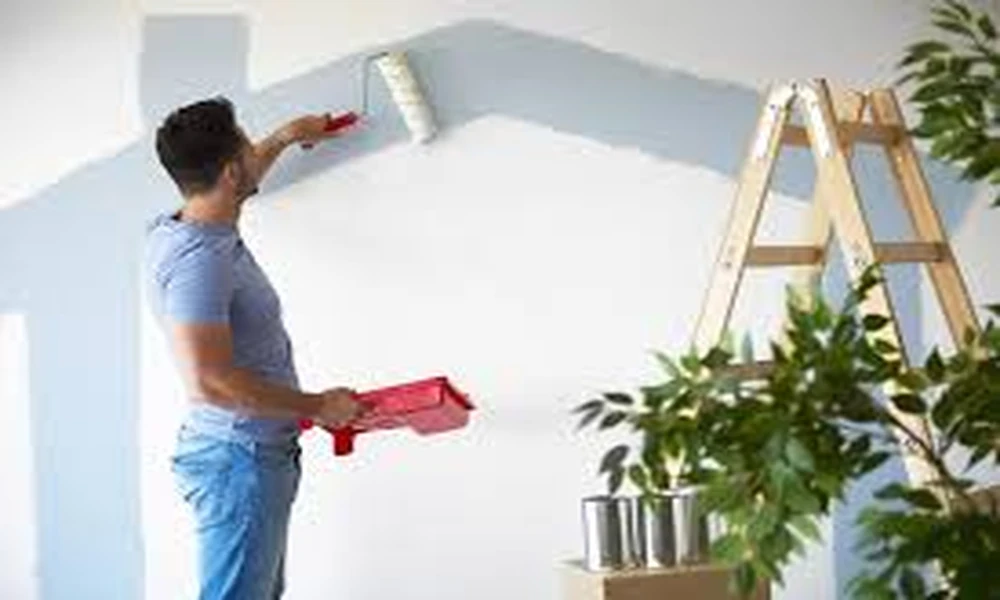
That smell is chemistry, not dirt. Fresh paint releases volatile organic compounds, VOCs for short, as it cures, and the odour fades only when the off-gassing finishes. Modern water-based emulsions mostly clear within one to three days. Oil-based gloss can linger for weeks. The internet offers a dozen remedies for speeding this up, and they sort neatly into three piles: the ones that work, the ones that only pretend to, and the ones that actively slow you down.
What Genuinely Works
Ventilation beats everything else combined, but it has to be the right kind. Opening one window swaps almost no air. Open windows on opposite sides of the property and the cross draught flushes the room continuously. Add a fan and point it out of the window rather than into the room, so it pushes contaminated air outside instead of stirring it around your face.
Heat finishes the job faster. Paint cures fast in a warm room, so run the radiator with the windows cracked, or use the cycle professionals use on winter jobs: shut the room up warm for an hour to drive the VOCs out of the film, then ventilate hard for thirty minutes, and repeat. It feels wasteful on the heating bill and works remarkably well.
For absorbing what lingers, activated charcoal is the real performer. It traps VOC molecules on its surface rather than perfuming over them. Bowls of it around the room, or an air purifier fitted with a carbon filter, pull the smell down overnight. Note the detail: a purifier with only a HEPA filter does nothing here, since HEPA catches particles and VOCs are gases. Bicarbonate of soda earns a place too, sprinkled on carpets and soft furnishings that have soaked up odour, then hoovered after a few hours.
What Only Masks The Problem
Half the folk remedies just shout louder than the paint. Scented candles, incense, coffee grounds and essential oil diffusers layer a second smell on top of the first, and the room ends up smelling of vanilla and solvent at once. The famous halved onion in a bowl of water sits in the masking pile as well; the evidence for onions absorbing VOCs is somewhere between thin and absent, and you trade paint smell for onion, which few people count as a win. Bowls of plain water absorb a little of certain compounds, very slowly. None of these methods shortens the curing, so the paint smell returns the moment the masking fades.
What Makes It Worse
Two mistakes drag the smell out for days longer. The first is painting with everything sealed up to keep heat in, which traps the VOC load in the room and slows evaporation. The second is humidity: drying clothes in a freshly painted room, or steaming and mopping it, keeps the film soft and off-gassing far beyond schedule. Sleeping in the room on night one belongs on this list too, especially for children, asthmatics and pregnant women, since you spend eight hours breathing the highest concentration the room will ever hold.
The Fix That Starts Before The Lid Comes Off
The quickest cure is prevention. Paints labelled low VOC or minimal VOC now match traditional formulas for finish and barely smell at all, and water-based satins have largely replaced solvent gloss on woodwork for exactly this reason. Any experienced decorators will specify these as standard for bedrooms, nurseries and occupied homes, schedule the smelliest coats for the morning so the room airs all day, and leave you with a property that smells of nothing by the weekend. Choose the right tin and most of this article becomes unnecessary, which is exactly how decorating should feel.